
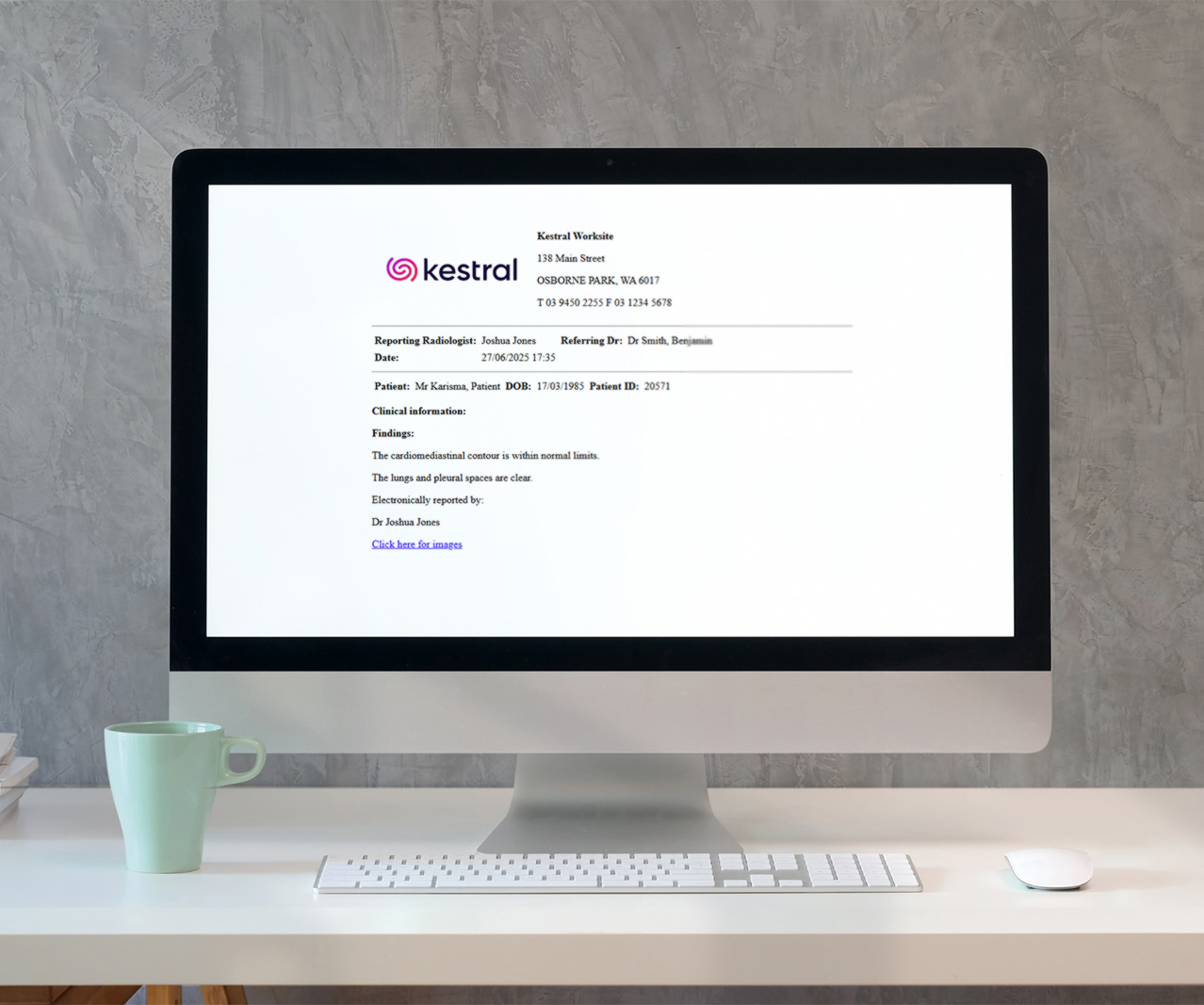
The quality of a radiology report gets a practice in the door. The quality of the experience around that report determines whether the referrals keep coming.
The Referral Relationship No One Talks About
Ask most practice managers what drives referrals and they’ll talk about clinical quality, location, and turnaround time. They’re right. But there’s a fourth factor that rarely gets named: the experience of receiving results from you.
A GP who receives a professional, well-formatted report with instant image access has a better experience of your practice than one who receives plain text that renders differently in their system, with no way to view the images without calling. The first GP refers more. The second drifts, often without ever articulating why.
This is the gap that modern report distribution is designed to close.
What Are Referrers Actually Asking For?
When we listen to what referring practitioners want from a radiology practice, three things come up consistently:
- Results that are fast and easy to read
- Images they can access without jumping through hoops
- A practice that respects that their time is limited
None of these are asks about technology. They are asks about experience. And they are entirely within a practice’s control to deliver.
Where Most Practices Are Losing Referrer Goodwill
The phone call that shouldn’t happen
When a GP receives a report and needs to view the images, they have a choice: navigate a portal they may not have credentials for, or call your front desk. Most call. That call, brief as it is, is a moment of friction. Your team has to stop what they’re doing. The GP has to wait. Neither experience is the one you want associated with your practice.
The report that looks unprofessional
Plain-text HL7 reports render inconsistently across practice management systems. What looks structured inside your RIS arrives as a wall of unformatted text in many GP inboxes. The radiologist’s careful work is invisible. The impression that creates, however unfair, reflects on your practice.
The manual task that eats your team’s day
Report distribution that requires human intervention is a workflow tax. Every step that isn’t automated is a step that costs time, introduces risk, and scales poorly as your practice grows.
What Changes When You Get This Right
Practices that invest in how results are delivered, not just the quality of the reporting, see concrete changes in their referrer relationships:
“Clickable links for our referrers have been a game changer. They streamline workflow by providing direct access to critical imaging data, enhancing diagnostic precision and communication with their patients. Our referrers no longer have to call us to sign up or ask for their log in details — this link leads them directly to their patient’s images. Referrers can view their images in the comfort of their own system. Thank you Kestral!”
— Timothy Scott, South West Radiology
Timothy Scott’s experience at South West Radiology captures it well. The value isn’t the technology. It’s what the technology removes. Phone calls. Friction. The small moments where a referrer’s confidence in your practice is quietly tested.
How Karisma Report Distribution Addresses This
Karisma Report Distribution is built around a simple idea: every result you send should make the referring practitioner’s day easier, not harder.
Reports are distributed automatically the moment they’re approved, in clean, branded HTML that renders consistently in every practice management system, with your logo included. Pre-authenticated image links give referrers one-click access to PACS images without a portal login or a call to your team.
The result is a referrer experience that reflects the quality of your clinical work. One that builds loyalty without your team having to do anything extra.
Frequently Asked Questions
Why does report distribution affect referrer relationships?
Because referrers experience your practice through every interaction, including how results arrive and how easy they are to act on. Consistent, professional, fast report delivery signals that you respect their time. Poor delivery, even if the clinical content is excellent, creates friction that erodes the relationship over time.
What is the best way to send radiology reports to GPs in Australia?
The most effective approach combines automated HTML report delivery with pre-authenticated PACS image links. This ensures referrers receive well-formatted reports with instant, one-click image access, regardless of which practice management system they use, and removes the phone calls and manual steps that create friction.
Do I need PACS image URLs to use HTML report distribution?
No. You can upgrade to HTML format reports with or without image links. URL functionality can be added at any point, so you’re not locked into a specific configuration from day one.
Which PACS providers are supported?
Kestral connects with all major PACS providers and information-sharing platforms. If a specific provider isn’t currently a Kestral partner, we’d be happy to explore options with you.
Read more about Karisma Report Distribution or download the factsheet