
How Does Kestral Online Bookings Work and What Does It Mean for Practice Operations?
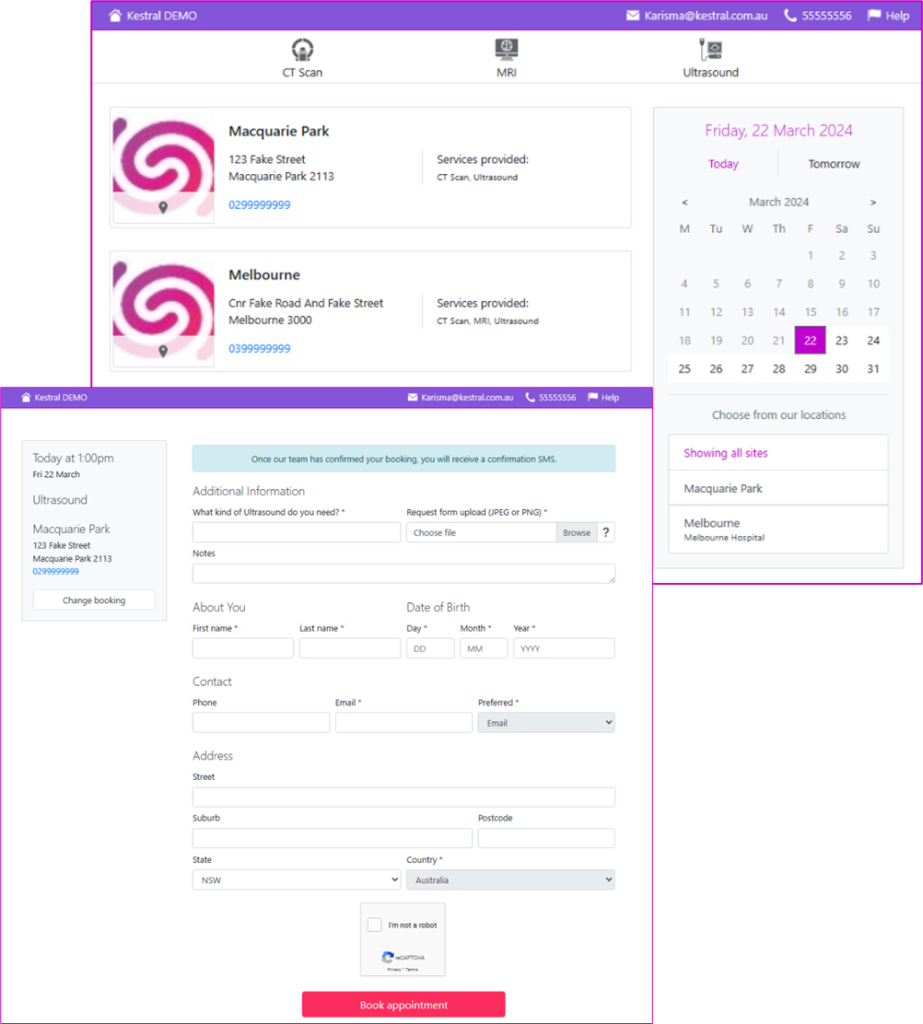
Patients expect to be able to book healthcare appointments on their own terms. Outside business hours, without waiting on hold, and through a process that does not require them to navigate a complex system to secure a time. For radiology practices across Australia and New Zealand, meeting that expectation while maintaining control over scheduling accuracy, […]
How Is AI Being Applied Across Radiology Practice Workflows Today?

The conversation about AI in radiology has moved well past the question of whether it will matter. It already does. The more useful question is where AI is delivering genuine, measurable improvement in clinical and operational workflows right now, and where the next wave of practical capability is heading. For an introduction to AI and […]
How Does Kestral’s API and K-Link Gateway Enable Smarter Integration for Radiology Practices?
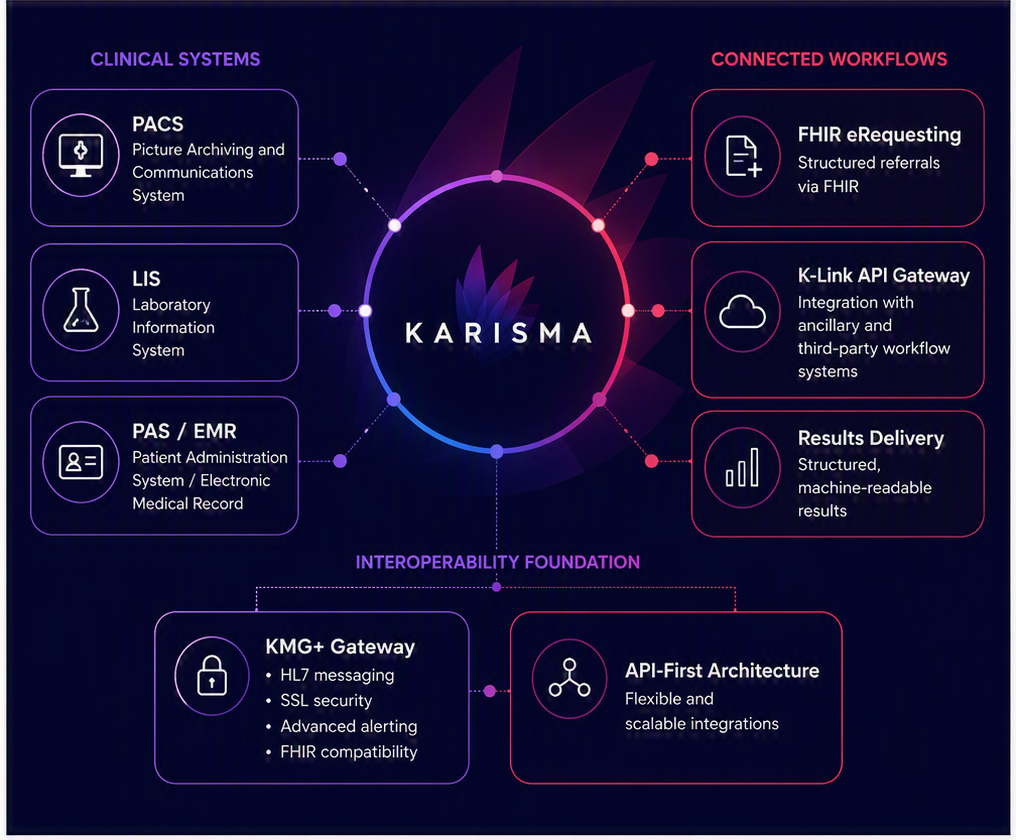
The Karisma API and K-Link integration gateway are Kestral’s tools for connecting Karisma with the third-party systems that radiology practices depend on. The API enables direct, structured data exchange between Karisma and external platforms. K-Link sits alongside it as the gateway layer that governs how those connections operate, adding security controls, throttle management and access […]
The Future of Diagnostic Healthcare: Insights from the Sparked Leadership event

At Kestral, we are committed to advancing diagnostic healthcare through seamless interoperability solutions. As the industry moves towards a more connected, patient-centric healthcare system, FHIR (Fast Healthcare Interoperability Resources) is setting the foundation for secure, efficient, and standardised data exchange. Recent industry discussions at the Sparked Leadership Evening reinforced this vision, bringing together health technology leaders, government […]
Understanding AI and its Impact on Medical Imaging
Artificial intelligence in medical imaging refers to the application of machine learning and deep learning technologies to image analysis, workflow management and reporting support in radiology. In 2026, AI is an operational reality across Australian and New Zealand radiology, with tools in active clinical use for triage, detection assistance, draft report generation and intelligent worklist […]
What Is FHIR and Why Does It Matter for Healthcare in Australia?
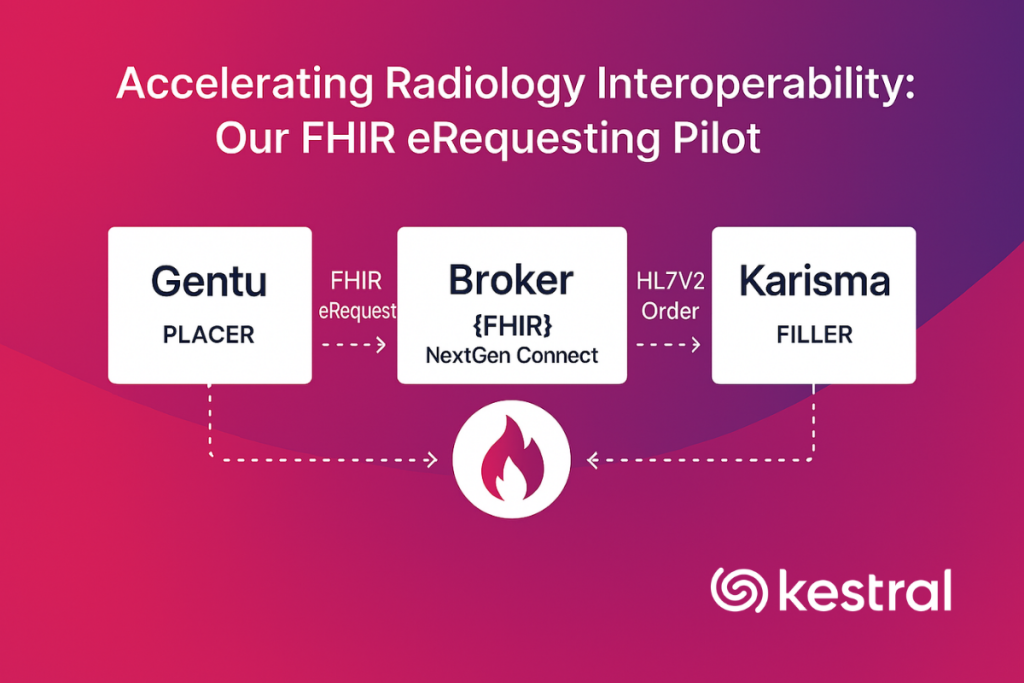
FHIR (Fast Healthcare Interoperability Resources) is the emerging global standard for electronic health data exchange, and its adoption across the Australian healthcare system is already underway. This FAQ explains what FHIR is, why it represents a significant step forward from legacy standards, and what it means for radiology and pathology practices operating in Australia and […]
Navigating the Future: Key Trends in Healthcare for 2025

The healthcare industry stands at a pivotal moment, shaped by workforce challenges, technological advancements, regulatory shifts, and evolving patient expectations. Let’s explore the key trends that are reshaping the future of healthcare and what they mean for patients, providers, and the broader community. Workforce Challenges: Caring for the Caregivers Demographic shifts, particularly the growing and ageing population, […]
My Health Record: Changes for 2025

The Australian Government will be making it a requirement for all public and private pathology and diagnostic imaging providers to share their reports by default to My Health Record (MyHR) in 2025. It is expected that pathology and diagnostic imaging providers will be sharing reports by default by June 30 2025 with legislative requirements expected in […]
What Should Practice Managers Expect From RIS Training and Support Throughout the Karisma Lifecycle?

Selecting a RIS is one decision. Getting the most out of it over the long term is a different challenge entirely, and it depends heavily on the quality of training and support that comes with it. For practice managers responsible for staff performance, system reliability and operational continuity, the support model behind a RIS matters […]
Why Does a Configurable RIS Matter in Optimising how your Radiology Practice Operates?

A RIS configured to reflect how a practice actually operates reduces the friction that comes from forcing clinical and administrative workflows into a system built around generic assumptions. For practices managing multiple worksites, complex modalities or large referrer networks across Australia and New Zealand, configuration is what makes the difference between a system that supports […]